
Petroleum
|


Petroleum is recovered mostly through oil drilling. This comes after the studies of structural geology (at the reservoir scale), sedimentary basin analysis, reservoir characterization (mainly in terms of the porosity and permeability of geologic reservoir structures). It is refined and separated, most easily by boiling point, into a large number of consumer products, from gasoline (petrol) and kerosene to asphalt and chemical reagents used to make plastics and pharmaceuticals. Petroleum is used in manufacturing a wide variety of materials, and it is estimated that the world consumes about 90 million barrels each day.
The use of fossil fuels such as petroleum has a negative impact on Earth's biosphere, releasing pollutants and greenhouse gases into the air and damaging ecosystems through events such as oil spills. Concern over the depletion of the earth's finite reserves of oil, and the effect this would have on a society dependent on it, is a concept known as peak oil.
Contents
- 1:
Etymology
- 2:
History
- 2.1:
Early
- 2.2:
Modern
- 3:
Composition
- 4:
Chemistry
- 5:
Empirical equations for thermal properties
- 5.1:
Heat of combustion
- 5.2:
Thermal conductivity
- 5.3:
Specific heat
- 5.4:
Latent heat of vaporization
- 6:
Formation
- 6.1:
Fossil petroleum
- 6.2:
Abiogenic petroleum
- 7:
Reservoirs
- 7.1:
Unconventional oil reservoirs
- 8:
Classification
- 9:
Industry
- 9.1:
Transport
- 9.2: Price
- 10:
Uses
- 10.1:
Fuels
- 10.2:
Other derivatives
- 10.3:
Agriculture
- 11:
Use by country
- 11.1:
Consumption statistics
- 11.2:
Consumption
- 11.3:
Production
- 11.4:
Exportation
- 11.5:
Importation
- 11.6:
Non-producing consumers
- 12:
Environmental effects
- 12.1:
Climate change
- 12.2:
Extraction
- 12.3:
Oil spills
- 12.4:
Tarballs
- 12.5:
Whales
- 13:
Alternatives
- 13.1:
Vehicle fuels
- 13.2:
Industrial oils
- 13.3:
Electricity
- 14:
International relations
- 14.1:
Conflict
- 14.2:
OPEC
- 15:
Future production
- 15.1:
Peak oil
- 15.2:
Unconventional oil
- 16: In fiction
Etymology
|

History
Early history
|

More than 4000 years ago, according to Herodotus and Diodorus Siculus, asphalt was used in the construction of the walls and towers of Babylon; there were oil pits near Ardericca (near Babylon), and a pitch spring on Zacynthus. Great quantities of it were found on the banks of the river Issus, one of the tributaries of the Euphrates. Ancient Persian tablets indicate the medicinal and lighting uses of petroleum in the upper levels of their society. By 347 AD, oil was produced from bamboo-drilled wells in China. Early British explorers to Myanmar documented a flourishing oil extraction industry based in Yenangyaung, that in 1795 had hundreds of hand-dug wells under production. The mythological origins of the oil fields at Yenangyaung, and its hereditary monopoly control by 24 families, indicate very ancient origins.
Modern history in 1847, the process to distill kerosene from petroleum was invented by James Young. He noticed a natural petroleum seepage in the Riddings colliery at Alfreton, Derbyshire from which he distilled a light thin oil suitable for use as lamp oil, at the same time obtaining a thicker oil suitable for lubricating machinery. In 1848 Young set up a small business refining the crude oil.
Young eventually succeeded, by distilling cannel coal at a low heat, in creating a fluid resembling petroleum, which when treated in the same way as the seep oil gave similar products. Young found that by slow distillation he could obtain a number of useful liquids from it, one of which he named "paraffine oil" because at low temperatures it congealed into a substance resembling paraffin wax.
The production of these oils and solid paraffin wax from coal formed the subject of his patent dated 17 October 1850. In 1850 Young & Meldrum and Edward William Binney entered into partnership under the title of E.W. Binney & Co. at Bathgate in West Lothian and E. Meldrum & Co. at Glasgow; their works at Bathgate were completed in 1851 and became the first truly commercial oil-works in the world with the first modern oil refinery, using oil extracted from locally-mined torbanite, shale, and bituminous coal to manufacture naphtha and lubricating oils; paraffin for fuel use and solid paraffin were not sold till 1856.
Another early refinery was built by Ignacy Łukasiewicz, providing a cheaper alternative to whale oil. The demand for petroleum as a fuel for lighting in North America and around the world quickly grew. Edwin Drake's 1859 well near Titusville, Pennsylvania, is popularly considered the first modern well. Drake's well is probably singled out because it was drilled, not dug; because it used a steam engine; because there was a company associated with it; and because it touched off a major boom. However, there was considerable activity before Drake in various parts of the world in the mid-19th century. A group directed by Major Alexeyev of the Bakinskii Corps of Mining Engineers hand-drilled a well in the Baku region in 1848. There were engine-drilled wells in West Virginia in the same year as Drake's well. An early commercial well was hand dug in Poland in 1853, and another in nearby Romania in 1857. At around the same time the world's first, small, oil refinery was opened at Jasło in Poland, with a larger one opened at Ploiești in Romania shortly after. Romania is the first country in the world to have had its annual crude oil output officially recorded in international statistics: 275 tonnes for 1857.
The first commercial oil well in Canada became operational in 1858 at Oil Springs, Ontario (then Canada West). Businessman James Miller Williams dug several wells between 1855 and 1858 before discovering a rich reserve of oil four metres below ground. Williams extracted 1.5 million litres of crude oil by 1860, refining much of it into kerosene lamp oil. William's well became commercially viable a year before Drake's Pennsylvania operation and could be argued to be the first commercial oil well in North America. The discovery at Oil Springs touched off an oil boom which brought hundreds of speculators and workers to the area. Advances in drilling continued into 1862 when local driller Shaw reached a depth of 62 metres using the spring-pole drilling method. On January 16, 1862, after an explosion of natural gas Canada's first oil gusher came into production, shooting into the air at a recorded rate of 3,000 barrels per day. By the end of the 19th century the Russian Empire, particularly the Branobel company in Azerbaijan, had taken the lead in production.
Access to oil was and still is a major factor in several military conflicts of the twentieth century, including World War II, during which oil facilities were a major strategic asset and were extensively bombed. The German invasion of the Soviet Union included the goal to capture the Baku oilfields, as it would provide much needed oil-supplies for the German military which was suffering from blockades. Oil exploration in North America during the early 20th century later led to the U.S. becoming the leading producer by mid-century. As petroleum production in the U.S. peaked during the 1960s, however, the United States was surpassed by Saudi Arabia and the Soviet Union.
Today, about 90 percent of vehicular fuel needs are met by oil. Petroleum also makes up 40 percent of total energy consumption in the United States, but is responsible for only 1 percent of electricity generation. Petroleum's worth as a portable, dense energy source powering the vast majority of vehicles and as the base of many industrial chemicals makes it one of the world's most important commodities. Viability of the oil commodity is controlled by several key parameters, number of vehicles in the world competing for fuel, quantity of oil exported to the world market (Export Land Model), Net Energy Gain (economically useful energy provided minus energy consumed), political stability of oil exporting nations and ability to defend oil supply lines.
The top three oil producing countries are Russia, Saudi Arabia, and the United States. About 80 percent of the world's readily accessible reserves are located in the Middle East, with 62.5 percent coming from the Arab 5: Saudi Arabia, UAE, Iraq, Qatar and Kuwait. A large portion of the world's total oil exists as unconventional sources, such as bitumen in Canada and oil shale in Venezuela. While significant volumes of oil are extracted from oil sands, particularly in Canada, logistical and technical hurdles remain, as oil extraction requires large amounts of heat and water, making its net energy content quite low relative to conventional crude oil. Thus, Canada's oil sands are not expected to provide more than a few million barrels per day in the foreseeable future.
Conventional crude oil production, those having Net Energy Gain above 10 stopped growing in 2005 at about 74 million barrels per day (11,800,000 m3/d). The International Energy Agency's (IEA) 2010 World Energy Outlook estimated that conventional crude oil production has peaked and is depleting at 6.8 percent per year. US Joint Forces Command's Joint Operating Environment 2010 issued this warning to all US military commands "By 2012, surplus oil production capacity could entirely disappear, and as early as 2015, the shortfall in output could reach nearly 10 million barrels per day."
CompositionIn its strictest sense, petroleum includes only crude oil, but in common usage it includes all liquid, gaseous, and solid hydrocarbons. Under surface pressure and temperature conditions, lighter hydrocarbons methane, ethane, propane and butane occur as gases, while pentane and heavier ones are in the form of liquids or solids. However, in an underground oil reservoir the proportions of gas, liquid, and solid depend on subsurface conditions and on the phase diagram of the petroleum mixture.
An oil well produces predominantly crude oil, with some natural gas dissolved in it. Because the pressure is lower at the surface than underground, some of the gas will come out of solution and be recovered (or burned) as associated gas or solution gas. A gas well produces predominantly natural gas. However, because the underground temperature and pressure are higher than at the surface, the gas may contain heavier hydrocarbons such as pentane, hexane, and heptane in the gaseous state. At surface conditions these will condense out of the gas to form natural gas condensate, often shortened to condensate. Condensate resembles petrol in appearance and is similar in composition to some volatile light crude oils.
The proportion of light hydrocarbons in the petroleum mixture varies greatly among different oil fields, ranging from as much as 97 percent by weight in the lighter oils to as little as 50 percent in the heavier oils and bitumens.
The hydrocarbons in crude oil are mostly alkanes, cycloalkanes and various aromatic hydrocarbons while the other organic compounds contain nitrogen, oxygen and sulfur, and trace amounts of metals such as iron, nickel, copper and vanadium. The exact molecular composition varies widely from formation to formation but the proportion of chemical elements vary over fairly narrow limits as follows:
Composition by weight
|
Element |
Percent range |
|
Carbon |
83 to 85% |
|
Hydrogen |
10 to 14% |
|
Nitrogen |
0.1 to 2% |
|
Oxygen |
0.05 to 1.5% |
|
Sulfur |
0.05 to 6.0% |
|
Metals |
< 0.1% |
Four different types of hydrocarbon molecules appear in crude oil. The relative percentage of each varies from oil to oil, determining the properties of each oil.
Composition by weight
|
Hydrocarbon |
Average |
Range |
|
Alkanes (paraffins) |
30% |
15 to 60% |
|
Naphthenes |
49% |
30 to 60% |
|
Aromatics |
15% |
3 to 30% |
|
Asphaltics |
6% |
remainder |
Crude oil varies greatly in appearance depending on its composition. It is usually black or dark brown (although it may be yellowish, reddish, or even greenish). In the reservoir it is usually found in association with natural gas, which being lighter forms a gas cap over the petroleum, and saline water which, being heavier than most forms of crude oil, generally sinks beneath it. Crude oil may also be found in semi-solid form mixed with sand and water, as in the Athabasca oil sands in Canada, where it is usually referred to as crude bitumen. In Canada, bitumen is considered a sticky, black, tar-like form of crude oil which is so thick and heavy that it must be heated or diluted before it will flow. Venezuela also has large amounts of oil in the Orinoco oil sands, although the hydrocarbons trapped in them are more fluid than in Canada and are usually called extra heavy oil. These oil sands resources are called unconventional oil to distinguish them from oil which can be extracted using traditional oil well methods. Between them, Canada and Venezuela contain an estimated 3.6 trillion barrels (570×109 m3) of bitumen and extra-heavy oil, about twice the volume of the world's reserves of conventional oil.
Petroleum is used mostly, by volume, for producing fuel oil and petrol, both important "primary energy" sources. 84 percent by volume of the hydrocarbons present in petroleum is converted into energy-rich fuels (petroleum-based fuels), including petrol, diesel, jet, heating, and other fuel oils, and liquefied petroleum gas. The lighter grades of crude oil produce the best yields of these products, but as the world's reserves of light and medium oil are depleted, oil refineries are increasingly having to process heavy oil and bitumen, and use more complex and expensive methods to produce the products required. Because heavier crude oils have too much carbon and not enough hydrogen, these processes generally involve removing carbon from or adding hydrogen to the molecules, and using fluid catalytic cracking to convert the longer, more complex molecules in the oil to the shorter, simpler ones in the fuels.
Due to its high energy density, easy transportability and relative abundance, oil has become the world's most important source of energy since the mid-1950s. Petroleum is also the raw material for many chemical products, including pharmaceuticals, solvents, fertilizers, pesticides, and plastics; the 16 percent not used for energy production is converted into these other materials. Petroleum is found in porous rock formations in the upper strata of some areas of the Earth's crust. There is also petroleum in oil sands (tar sands). Known oil reserves are typically estimated at around 190 km3 (1.2 trillion (short scale) barrels) without oil sands, or 595 km3 (3.74 trillion barrels) with oil sands. Consumption is currently around 84 million barrels (13.4×10⁶ m3) per day, or 4.9 km3 per year. Which in turn yields a remaining oil supply of only about 120 years, if current demand remain static.
Chemistry
The alkanes, also known as paraffins, are saturated hydrocarbons with straight or branched chains which contain only carbon and hydrogen and have the general formula CnH2n+2. They generally have from 5 to 40 carbon atoms per molecule, although trace amounts of shorter or longer molecules may be present in the mixture.
The alkanes from pentane (C5H12) to octane (C8H18) are refined into gasoline, the ones from nonane (C9H20) to hexadecane (C16H34) into diesel fuel, kerosene and jet fuel. Alkanes with more than 16 carbon atoms can be refined into fuel oil and lubricating oil. At the heavier end of the range, paraffin wax is an alkane with approximately 25 carbon atoms, while asphalt has 35 and up, although these are usually cracked by modern refineries into more valuable products. The shortest molecules, those with four or fewer carbon atoms, are in a gaseous state at room temperature. They are the petroleum gases. Depending on demand and the cost of recovery, these gases are either flared off, sold as liquefied petroleum gas under pressure, or used to power the refinery's own burners. During the winter, butane (C4H10), is blended into the gasoline pool at high rates, because its high vapour pressure assists with cold starts. Liquified under pressure slightly above atmospheric, it is best known for powering cigarette lighters, but it is also a main fuel source for many developing countries. Propane can be liquified under modest pressure, and is consumed for just about every application relying on petroleum for energy, from cooking to heating to transportation.
The cycloalkanes, also known as naphthenes, are saturated hydrocarbons which have one or more carbon rings to which hydrogen atoms are attached according to the formula CnH2n. Cycloalkanes have similar properties to alkanes but have higher boiling points.
The aromatic hydrocarbons are unsaturated hydrocarbons which have one or more planar six-carbon rings called benzene rings, to which hydrogen atoms are attached with the formula CnH2n-6. They tend to burn with a sooty flame, and many have a sweet aroma. Some are carcinogenic.
These different molecules are separated by fractional distillation at an oil refinery to produce gasoline, jet fuel, kerosene, and other hydrocarbons. For example, 2,2,4-trimethylpentane (isooctane), widely used in gasoline, has a chemical formula of C8H18 and it reacts with oxygen exothermically:
2 C8 H18(l) + 25 O2(g) → 16 CO2(g) + 18 H2O(g) (ΔH = −5.51 MJ/mol of octane)
Incomplete combustion of petroleum or petrol results in production of toxic byproducts. Too little oxygen results in carbon monoxide. Due to the high temperatures and high pressures involved, exhaust gases from petrol combustion in car engines usually include nitrogen oxides which are responsible for creation of photochemical smog.
Empirical equations for thermal properties
Heat of combustion
At a constant volume, the heat of combustion of a petroleum
product can be approximated as follows:
 .
.where
 is measured in cal/gram and d is the specific gravity at 60 °F (16 °C).
Thermal conductivity

where K is measured in BTU · in · F−1hr−1ft−2 , t is measured in F and d is the specific gravity at 60 °F (16 °C).
Note: The original reference has the API gravity, not specific gravity, as the denominator.
Specific heat
 ,
,In units of kcal/(kg·°C), the formula is:
 ,
,where the temperature t is in Celsius and d is the specific gravity at 15 °C.
Latent heat of vaporization
 ,
,where L is measured in BTU/lbm, t is measured in °F and d is the specific gravity at 60 °F (16 °C).
In units of kcal/kg, the formula is:
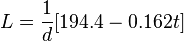 ,
,where the temperature t is in Celsius and d is the specific gravity at 15 °C.
Formation
Fossil petroleum
Anaerobic decay
Kerogen formation
Some phenolic compounds produced from previous reactions worked as bactericides and the actinomycetales order of bacteria also produced antibiotic compounds (e.g., streptomycin). Thus the action of anaerobic bacteria ceased at about 10 m below the water or sediment. The mixture at this depth contained fulvic acids, unreacted and partially reacted fats and waxes, slightly modified lignin, resins and other hydrocarbons. As more layers of organic matter settled to the sea or lake bed, intense heat and pressure built up in the lower regions. As a consequence, compounds of this mixture began to combine in poorly understood ways to kerogen. Combination happened in a similar fashion as phenol and formaldehyde molecules react to urea-formaldehyde resins, but kerogen formation occurred in a more complex manner due to a bigger variety of reactants. The total process of kerogen formation from the beginning of anaerobic decay is called diagenesis, a word that means a transformation of materials by dissolution and recombination of their constituents.Transformation of kerogen into fossil fuels
Kerogen formation continued to the depth of about 1 km from the Earth's surface where temperatures may reach around 50 °C. Kerogen formation represents a halfway point between organic matter and fossil fuels: kerogen can be exposed to oxygen, oxidize and thus be lost or it could be buried deeper inside the Earth's crust and be subjected to conditions which allow it to slowly transform into fossil fuels like petroleum. The latter happened through catagenesis in which the reactions were mostly radical rearrangements of kerogen. These reactions took thousands to millions of years and no external reactants were involved. Due to radical nature of these reactions, kerogen reacted towards two classes of products: those with low H/C ratio (anthracene or products similar to it) and those with high H/C ratio (methane or products similar to it); i.e., carbon-rich or hydrogen-rich products. Because catagenesis was closed off from external reactants, the resulting composition of the fuel mixture was dependent on the composition of the kerogen via reaction stoichiometry. 3 main types of kerogen exist: type I (algal), II (liptinic) and III (humic), which were formed mainly from algae, plankton and woody plants (this term includes trees, shrubs and lianas) respectively.Abiogenic petroleum
Reservoirs
- a source
rock rich in hydrocarbon material buried deeply enough for
subterranean heat to cook it into oil,
- a porous and permeable reservoir
rock where it can accumulate,
- a caprock (seal) or other mechanism to prevent the oil from escaping to the surface. Within these reservoirs, fluids will typically organize themselves like a three-layer cake with a layer of water below the oil layer and a layer of gas above it, although the different layers vary in size between reservoirs. Because most hydrocarbons are less dense than rock or water, they often migrate upward through adjacent rock layers until either reaching the surface or becoming trapped within porous rocks (known as reservoirs) by impermeable rocks above. However, the process is influenced by underground water flows, causing oil to migrate hundreds of kilometres horizontally or even short distances downward before becoming trapped in a reservoir. When hydrocarbons are concentrated in a trap, an oil field forms, from which the liquid can be extracted by drilling and pumping.
Unconventional oil reservoirs
Classification
- West
Texas Intermediate (WTI), a very high-quality, sweet, light oil
delivered at Cushing, Oklahoma for North American oil
- Brent
Blend, consisting of 15 oils from fields in the Brent and Ninian systems
in the East Shetland Basin of the North Sea. The oil is
landed at Sullom Voe terminal in Shetland. Oil production
from Europe, Africa and Middle Eastern oil flowing West tends to be priced
off this oil, which forms a benchmark
- Dubai-Oman,
used as benchmark for Middle East sour crude oil flowing to the
Asia-Pacific region
- Tapis (from Malaysia,
used as a reference for light Far East oil)
- Minas
(from Indonesia, used as a reference for heavy Far East oil)
- The OPEC
Reference Basket, a weighted average of oil blends from various OPEC (The
Organization of the Petroleum Exporting Countries) countries
- Midway
Sunset Heavy, by which heavy oil in California is priced
- Western Canadian Select the benchmark crude oil for emerging heavy, high TAN (acidic) crudes.
Once extracted, oil is refined and separated, most easily by distillation, into numerous products for direct use or use in manufacturing, such as gasoline (petrol), diesel and kerosene to asphalt and chemical reagents (ethylene, propylene, butene, acrylic acid, para-xylene) used to make plastics, pesticides and pharmaceuticals.
Industry
Transport
Price
Uses
Fuels
Common fractions of petroleum as fuels
|
Fraction |
Boiling range °C |
|
Liquefied petroleum gas (LPG) |
−40 |
|
Butane |
−12 to −1 |
|
Gasoline/Petrol |
−1 to 110 |
|
Jet fuel |
150 to 205 |
|
Kerosene |
205 to 260 |
|
Fuel oil |
205 to 290 |
|
Diesel fuel |
260 to 315 |
Petroleum classification according to chemical composition.
|
Class of petroleum |
Composition of 250–300 °C fraction, |
||||
|
Par. |
Napth |
Arom. |
Wax |
Asph. |
|
|
Paraffinic |
46–61 |
22–32 |
12–25 |
1.5–10 |
0–6 |
|
Paraffinic-naphtenic |
42–45 |
38–39 |
16–20 |
1–6 |
0–6 |
|
Naphthenic |
15–26 |
61–76 |
8–13 |
Trace |
0–6 |
|
Paraffinic-naphtenic-aromatic |
27–35 |
36–47 |
26–33 |
0.5–1 |
0–10 |
|
Aromatic |
0–8 |
57–78 |
20–25 |
0–0.5 |
0–20 |
Other derivatives
Certain types of resultant hydrocarbons may be mixed with other non-hydrocarbons, to create other end products:- Alkenes (olefins),
which can be manufactured into plastics or other compounds
- Lubricants (produces
light machine oils, motor oils, and greases, adding viscosity stabilizers
as required)
- Wax,
used in the packaging of frozen foods, among others
- Sulfur or sulfuric
acid. These are useful industrial materials. Sulfuric acid is usually
prepared as the acid precursor oleum, a byproduct of sulfur
removal from fuels.
- Bulk tar
- Asphalt
- Petroleum
coke, used in speciality carbon products or as solid fuel
- Paraffin
wax
- Aromatic petrochemicals to
be used as precursors in other chemical production
Agriculture
Use by country
Consumption statistics
 Global fossil carbon emissions, an indicator of consumption, from 1800. Total Oil |
 |
 |
 US Europe Asia and Oceania
|
 |
Consumption
According to the US Energy Information Administration (EIA) estimate for 2017, the world consumes 98.8 million barrels of oil each day.
 | ||
Oil consumption per capita (darker colors represent more consumption, gray represents no data) (source: see file description).
|
|
Consuming nation 2011 |
(1000 bbl/ |
(1000 m3/ |
Population |
bbl/year |
m3/year |
National production/ |
|
United States 1 |
18,835.5 |
2,994.6 |
314 |
21.8 |
3.47 |
0.51 |
|
China |
9,790.0 |
1,556.5 |
1345 |
2.7 |
0.43 |
0.41 |
|
Japan 2 |
4,464.1 |
709.7 |
127 |
12.8 |
2.04 |
0.03 |
|
India 2 |
3,292.2 |
523.4 |
1198 |
1 |
0.16 |
0.26 |
|
Russia 1 |
3,145.1 |
500.0 |
140 |
8.1 |
1.29 |
3.35 |
|
Saudi Arabia (OPEC) |
2,817.5 |
447.9 |
27 |
40 |
6.4 |
3.64 |
|
Brazil |
2,594.2 |
412.4 |
193 |
4.9 |
0.78 |
0.99 |
|
Germany 2 |
2,400.1 |
381.6 |
82 |
10.7 |
1.70 |
0.06 |
|
Canada |
2,259.1 |
359.2 |
33 |
24.6 |
3.91 |
1.54 |
|
South Korea 2 |
2,230.2 |
354.6 |
48 |
16.8 |
2.67 |
0.02 |
|
Mexico 1 |
2,132.7 |
339.1 |
109 |
7.1 |
1.13 |
1.39 |
|
France 2 |
1,791.5 |
284.8 |
62 |
10.5 |
1.67 |
0.03 |
|
Iran (OPEC) |
1,694.4 |
269.4 |
74 |
8.3 |
1.32 |
2.54 |
|
United Kingdom 1 |
1,607.9 |
255.6 |
61 |
9.5 |
1.51 |
0.93 |
|
Italy 2 |
1,453.6 |
231.1 |
60 |
8.9 |
1.41 |
0.10 |
Source: US Energy Information Administration
Population Data:
1 peak production of oil already passed
in this state
2 This country is not a major oil producer
Production
 |
| Top oil-producing countries |
 |
| World map with countries by oil production (information from 2006–2012). |
In petroleum industry parlance, production refers to the quantity of crude extracted from reserves, not the literal creation of the product.
|
Country |
Oil Production |
|
|
1 |
 Russia Russia |
10,551,497 |
|
2 |
 Saudi
Arabia (OPEC) Saudi
Arabia (OPEC) |
10,460,710 |
|
3 |
 United
States United
States |
8,875,817 |
|
4 |
 Iraq (OPEC) Iraq (OPEC) |
4,451,516 |
|
5 |
 Iran (OPEC) Iran (OPEC) |
3,990,956 |
|
6 |
 China,
People's Republic of China,
People's Republic of |
3,980,650 |
|
7 |
 Canada Canada |
3,662,694 |
|
8 |
 United
Arab Emirates (OPEC) United
Arab Emirates (OPEC) |
3,106,077 |
|
9 |
 Kuwait (OPEC) Kuwait (OPEC) |
2,923,825 |
|
10 |
 Brazil Brazil |
2,515,459 |
|
11 |
 Venezuela (OPEC) Venezuela (OPEC) |
2,276,967 |
|
12 |
 Mexico Mexico |
2,186,877 |
|
13 |
 Nigeria (OPEC) Nigeria (OPEC) |
1,999,885 |
|
14 |
 Angola (OPEC) Angola (OPEC) |
1,769,615 |
|
15 |
 Norway Norway |
1,647,975 |
|
16 |
 Kazakhstan Kazakhstan |
1,595,199 |
|
17 |
 Qatar (OPEC) Qatar (OPEC) |
1,522,902 |
|
18 |
 Algeria (OPEC) Algeria (OPEC) |
1,348,361 |
|
19 |
 Oman Oman |
1,006,841 |
|
20 |
 United
Kingdom United
Kingdom |
939,760 |
Exportation
 |
| Petroleum Exports by Country (2014) from Harvard Atlas of Economic Complexity |
 |
| Oil exports by country (barrels per day, 2006). |
In order of net exports in 2011, 2009 and 2006 in thousand bbl/d and thousand m3/d:
|
# |
Exporting nation |
103bbl/d (2011) |
103m3/d (2011) |
103bbl/d (2009) |
103m3/d (2009) |
103bbl/d (2006) |
103m3/d (2006) |
|
1 |
Saudi Arabia (OPEC) |
8,336 |
1,325 |
7,322 |
1,164 |
8,651 |
1,376 |
|
2 |
Russia 1 |
7,083 |
1,126 |
7,194 |
1,144 |
6,565 |
1,044 |
|
3 |
Iran (OPEC) |
2,540 |
403 |
2,486 |
395 |
2,519 |
401 |
|
4 |
United Arab Emirates (OPEC) |
2,524 |
401 |
2,303 |
366 |
2,515 |
400 |
|
5 |
Kuwait (OPEC) |
2,343 |
373 |
2,124 |
338 |
2,150 |
342 |
|
6 |
Nigeria (OPEC) |
2,257 |
359 |
1,939 |
308 |
2,146 |
341 |
|
7 |
Iraq (OPEC) |
1,915 |
304 |
1,764 |
280 |
1,438 |
229 |
|
8 |
Angola (OPEC) |
1,760 |
280 |
1,878 |
299 |
1,363 |
217 |
|
9 |
Norway 1 |
1,752 |
279 |
2,132 |
339 |
2,542 |
404 |
|
10 |
Venezuela (OPEC) 1 |
1,715 |
273 |
1,748 |
278 |
2,203 |
350 |
|
11 |
Algeria (OPEC) 1 |
1,568 |
249 |
1,767 |
281 |
1,847 |
297 |
|
12 |
Qatar (OPEC) |
1,468 |
233 |
1,066 |
169 |
– |
– |
|
13 |
Canada 2 |
1,405 |
223 |
1,168 |
187 |
1,071 |
170 |
|
14 |
Kazakhstan |
1,396 |
222 |
1,299 |
207 |
1,114 |
177 |
|
15 |
Azerbaijan 1 |
836 |
133 |
912 |
145 |
532 |
85 |
|
16 |
Trinidad and Tobago 1 |
177 |
112 |
167 |
160 |
155 |
199 |
Source: US Energy Information Administration
1 peak production already passed in
this state
2 Canadian statistics are complicated by the
fact it is both an importer and exporter of crude oil, and refines large
amounts of oil for the U.S. market. It is the leading source of U.S. imports of
oil and products, averaging 2,500,000 bbl/d (400,000 m3/d)
in August 2007.
Total world production/consumption (as of 2005) is
approximately 84 million barrels per day (13,400,000 m3/d).
Importation
 |
| Oil imports by country (barrels per day, 2006). |
In order of net imports in 2011, 2009 and 2006 in thousand bbl/d and thousand m3/d:
|
# |
Importing nation |
103bbl/day (2011) |
103m3/day (2011) |
103bbl/day (2009) |
103m3/day (2009) |
103bbl/day (2006) |
103m3/day (2006) |
|
1 |
United States 1 |
8,728 |
1,388 |
9,631 |
1,531 |
12,220 |
1,943 |
|
2 |
China |
5,487 |
872 |
4,328 |
688 |
3,438 |
547 |
|
3 |
Japan |
4,329 |
688 |
4,235 |
673 |
5,097 |
810 |
|
4 |
India |
2,349 |
373 |
2,233 |
355 |
1,687 |
268 |
|
5 |
Germany |
2,235 |
355 |
2,323 |
369 |
2,483 |
395 |
|
6 |
South Korea |
2,170 |
345 |
2,139 |
340 |
2,150 |
342 |
|
7 |
France |
1,697 |
270 |
1,749 |
278 |
1,893 |
301 |
|
8 |
Spain |
1,346 |
214 |
1,439 |
229 |
1,555 |
247 |
|
9 |
Italy |
1,292 |
205 |
1,381 |
220 |
1,558 |
248 |
|
10 |
Singapore |
1,172 |
186 |
916 |
146 |
787 |
125 |
|
11 |
Republic of China (Taiwan) |
1,009 |
160 |
944 |
150 |
942 |
150 |
|
12 |
Netherlands |
948 |
151 |
973 |
155 |
936 |
149 |
|
13 |
Turkey |
650 |
103 |
650 |
103 |
576 |
92 |
|
14 |
Belgium |
634 |
101 |
597 |
95 |
546 |
87 |
|
15 |
Thailand |
592 |
94 |
538 |
86 |
606 |
96 |
Source: US Energy Information Administration
1 peak production of oil expected in
2020
Non-producing consumers
Countries whose oil production is 10% or less of their
consumption.
|
# |
Consuming nation |
(bbl/day) |
(m3/day) |
|
1 |
Japan |
5,578,000 |
886,831 |
|
2 |
Germany |
2,677,000 |
425,609 |
|
3 |
South Korea |
2,061,000 |
327,673 |
|
4 |
France |
2,060,000 |
327,514 |
|
5 |
Italy |
1,874,000 |
297,942 |
|
6 |
Spain |
1,537,000 |
244,363 |
|
7 |
Netherlands |
946,700 |
150,513 |
|
8 |
Turkey |
575,011 |
91,663 |
Source: CIA World Factbook
Environmental effects
Climate change
As of 2018, about a quarter of annual global greenhouse gas emissions is the carbon dioxide from burning petroleum (plus methane leaks from the industry). Along with the burning of coal, petroleum combustion is the largest contributor to the increase in atmospheric CO2. Atmospheric CO2 has risen over the last 150 years to current levels of over 415 ppmv, from the 180–300 ppmv of the prior 800 thousand years. This rise in temperature has reduced the minimum Arctic ice pack to 4,320,000 km2 (1,670,000 sq mi), a loss of almost half since satellite measurements started in 1979.Extraction
Oil extraction is simply the removal of oil from the
reservoir (oil pool). Oil is often recovered as a water-in-oil emulsion,
and specialty chemicals called demulsifiers are used to
separate the oil from water. Oil extraction is costly and often environmentally
damaging. Offshore exploration and extraction of oil disturb the surrounding
marine environment.
Oil spills
Crude oil and refined fuel spills from tanker
ship accidents have damaged natural ecosystems and human
livelihoods in Alaska, the Gulf of Mexico, the Galápagos Islands,
France and many other places.
The quantity of oil spilled during accidents has ranged from
a few hundred tons to several hundred thousand tons (e.g., Deepwater
Horizon oil spill, SS Atlantic Empress, Amoco Cadiz). Smaller spills
have already proven to have a great impact on ecosystems, such as the Exxon
Valdez oil spill.
Oil spills at sea are generally much more damaging than
those on land, since they can spread for hundreds of nautical miles in a
thin oil slick which can cover beaches with a thin coating of oil.
This can kill sea birds, mammals, shellfish and other organisms it coats. Oil
spills on land are more readily containable if a makeshift earth dam can be
rapidly bulldozed around the spill site before most of the oil
escapes, and land animals can avoid the oil more easily.
Control of oil spills is difficult, requires ad hoc methods,
and often a large amount of manpower. The dropping of bombs and incendiary
devices from aircraft on the SS Torrey Canyon wreck
produced poor results; modern techniques would include pumping the oil
from the wreck, like in the Prestige oil spill or
the Erika oil spill.
Though crude oil is predominantly composed of various
hydrocarbons, certain nitrogen heterocyclic compounds, such as pyridine, picoline,
and quinoline are reported as contaminants associated with crude oil,
as well as facilities processing oil shale or coal, and have also been found at
legacy wood treatment sites. These compounds have a very high water
solubility, and thus tend to dissolve and move with water. Certain naturally
occurring bacteria, such as Micrococcus, Arthrobacter,
and Rhodococcus have been shown to degrade these contaminants.
Tarballs
A tarball is a blob of crude oil (not to be confused
with tar, which is a man-made product derived from pine trees or refined
from petroleum) which has been weathered after floating in the ocean. Tarballs
are an aquatic pollutant in most environments, although they can
occur naturally, for example in the Santa Barbara Channel of California or
in the Gulf of Mexico off Texas. Their concentration and features have
been used to assess the extent of oil spills. Their composition can be
used to identify their sources of origin, and tarballs themselves may be
dispersed over long distances by deep sea currents. They
are slowly decomposed by bacteria, including Chromobacterium violaceum, Cladosporium
resinae, Bacillus submarinus, Micrococcus varians, Pseudomonas
aeruginosa, Candida marina and Saccharomyces
estuari.
Whales
James S. Robbins has argued that the advent of
petroleum-refined kerosene saved some species of great whales from extinction by
providing an inexpensive substitute for whale oil, thus eliminating the
economic imperative for open-boat whaling.
Alternatives
In the United States in 2007 about 70 percent of petroleum was used for transportation (e.g. gasoline, diesel, jet fuel), 24 percent by industry (e.g. production of plastics), 5 percent for residential and commercial uses, and 2 percent for electricity production. Outside of the US, a higher proportion of petroleum tends to be used for electricity.
Vehicle fuels
Petroleum-based vehicle fuels can be replaced by either alternative fuels, or other methods of propulsion such as electric or nuclear.
Alternative fuel vehicles refers to both:
- Vehicles
that use alternative fuels used in standard or
modified internal combustion engines such as natural gas
vehicles, neat ethanol vehicles, flexible-fuel
vehicles, biodiesel-powered vehicles, propane autogas,
and hydrogen vehicles.
- Vehicles
with advanced propulsion systems that reduce or substitute petroleum use
such as battery electric vehicles, plug-in hybrid electric
vehicles, hybrid electric vehicles, and hydrogen fuel cell
vehicles.
Industrial oils
Biological feedstocks do exist for industrial uses such
as Bioplastic production.
Electricity
In oil producing countries with little refinery capacity,
oil is sometimes burned to produce electricity.
International relations
Control of petroleum production has been a significant
driver of international relations during much of the 20th and 21st centuries. Organizations
like OPEC have played an outsized role in international politics. Some
historians and commentators have called this the "Age of
Oil" With the rise of renewable energy and addressing climate
change some commentators expect a realignment of international power away
from petrostates.
Conflict
Petroleum production is tightly linked with
conflict: whether through direct aggression such as the U.S. invasion of
Iraq, trade wars such as the 2020 Russia–Saudi Arabia oil price war, or by
fueling conflict in regions such as funding Islamic State of Iraq and the
Levant in the Syrian civil war.
OPEC
The Organization of the Petroleum Exporting Countries (OPEC, /ˈoʊpɛk/ OH-pek) is an intergovernmental organization of 13 countries. Founded on 14 September 1960 in Baghdad by the first five members (Iran, Iraq, Kuwait, Saudi Arabia, and Venezuela), it has since 1965 been headquartered in Vienna, Austria, although Austria is not an OPEC member state. As of September 2018, the 13 member countries accounted for an estimated 44 percent of global oil production and 81.5 percent of the world's "proven" oil reserves, giving OPEC a major influence on global oil prices that were previously determined by the so-called "Seven Sisters" grouping of multinational oil companies. A larger group called OPEC+ was formed in late 2016 to have more control on the global crude oil market.The stated mission of the organization is to
"coordinate and unify the petroleum policies of its member countries and
ensure the stabilization of oil markets, in order to secure an efficient,
economic and regular supply of petroleum to consumers, a steady
income to producers, and a fair return on capital for those investing in the petroleum
industry." The organization is also a significant provider of
information about the international oil market. The current OPEC members are
the following: Algeria, Angola, Equatorial
Guinea, Gabon, Iran, Iraq, Kuwait, Libya, Nigeria,
the Republic of the Congo, Saudi Arabia (the de
facto leader), the United Arab Emirates and Venezuela.
Former OPEC members are Ecuador, Indonesia and Qatar.
The formation of OPEC marked a turning point
toward national sovereignty over natural resources, and OPEC decisions
have come to play a prominent role in the global oil market
and international relations. The effect can be particularly strong when
wars or civil disorders lead to extended interruptions in supply. In
the 1970s, restrictions in oil production led to a dramatic rise in
oil prices and in the revenue and wealth of OPEC, with long-lasting and
far-reaching consequences for the global economy. In the 1980s, OPEC began
setting production targets for its member nations; generally, when
the targets are reduced, oil prices increase. This has occurred most recently
from the organization's 2008 and 2016 decisions to trim oversupply.
Economists often cite OPEC as a textbook example of
a cartel that cooperates to reduce market competition, but one
whose consultations are protected by the doctrine of state immunity under
international law. In December 2014, "OPEC and the oil men" ranked
third on Lloyd's of London list of "the top 100 most influential
people in the shipping industry". However, the influence of OPEC on
international trade is periodically challenged by the expansion of non-OPEC
energy sources, and by the recurring temptation for individual OPEC countries
to exceed production targets and pursue conflicting self-interests.
In October 2019, Saudi Arabia invited Brazil to join OPEC. The president of Petrobras, Roberto Castello Branco, in an interview in New York, said that being a member of OPEC is not an option currently considered by the Brazilian federal government.
Future production
Consumption in the twentieth and twenty-first centuries has been abundantly pushed by automobile sector growth. The 1985–2003 oil glut even fueled the sales of low fuel economy vehicles in OECD countries. The 2008 economic crisis seems to have had some impact on the sales of such vehicles; still, in 2008 oil consumption showed a small increase.
In 2016 Goldman Sachs predicted lower demand for oil due to
emerging economies concerns, especially
China. The BRICS (Brasil, Russia, India, China, South Africa)
countries might also kick in, as China briefly was the first automobile market
in December 2009. In the long term, uncertainties linger; the OPEC believes
that the OECD countries will push low consumption policies at some point in the
future; when that happens, it will definitely curb oil sales, and both OPEC and
the Energy Information Administration (EIA) kept lowering their 2020
consumption estimates during the past five years. A detailed review
of International Energy Agency oil projections have revealed that
revisions of world oil production, price and investments have been motivated by
a combination of demand and supply factors. All together, Non-OPEC conventional
projections have been fairly stable the last 15 years, while downward revisions
were mainly allocated to OPEC. Recent upward revisions are primarily a result
of US tight oil.
Production will also face an increasingly complex situation;
while OPEC countries still have large reserves at low production prices, newly
found reservoirs often lead to higher prices; offshore giants such
as Tupi, Guara and Tiber demand high investments and
ever-increasing technological abilities. Subsalt reservoirs such as Tupi were
unknown in the twentieth century, mainly because the industry was unable to
probe them. Enhanced Oil Recovery (EOR) techniques
(example: DaQing, China) will
continue to play a major role in increasing the world's recoverable oil.
The expected availability of petroleum resources has always
been around 35 years or even less since the start of the modern exploration.
The oil constant, an insider pun in the German industry, refers to that
effect.
A growing number of divestment campaigns from major funds
pushed by newer generations who question the sustainability of petroleum may
hinder the financing of future oil prospection and production.
Peak oil
Peak oil is a term applied to the projection that future
petroleum production (whether for individual oil wells, entire oil fields,
whole countries, or worldwide production) will eventually peak and then decline
at a similar rate to the rate of increase before the peak as these reserves are
exhausted. The peak of oil discoveries was in 1965, and oil production per year
has surpassed oil discoveries every year since 1980. However, this does
not mean that potential oil production has surpassed oil demand.
It is difficult to predict the oil peak in any given region,
due to the lack of knowledge and/or transparency in accounting of global oil
reserves. Based on available production data, proponents have previously
predicted the peak for the world to be in years 1989, 1995, or 1995–2000. Some
of these predictions date from before the recession of the early 1980s, and the
consequent reduction in global consumption, the effect of which was to delay
the date of any peak by several years. Just as the 1971 U.S. peak in oil
production was only clearly recognized after the fact, a peak in world
production will be difficult to discern until production clearly drops
off. The peak is also a moving target as it is now measured as
"liquids", which includes synthetic fuels, instead of just
conventional oil.
In 2020, according to BP's Energy Outlook 2020, peak
oil had been reached, due to the changing energy landscape coupled with
the economic toll of the COVID-19 pandemic.
While there has been much focus historically on peak oil
supply, focus is increasingly shifting to peak demand as more countries seek to
transition to renewable energy. The GeGaLo index of geopolitical gains and
losses assesses how the geopolitical position of 156 countries may change if
the world fully transitions to renewable energy resources. Former oil exporters
are expected to lose power, while the positions of former oil importers and
countries rich in renewable energy resources is expected to strengthen.
Unconventional oil
Unconventional oil is petroleum produced or extracted using
techniques other than the conventional methods. The calculus for peak oil
has changed with the introduction of unconventional production methods. In
particular, the combination of horizontal drilling and hydraulic
fracturing has resulted in a significant increase in production from
previously uneconomic plays. Analysts expected that $150 billion would be
spent on further developing North American tight oil fields in 2015. The large
increase in tight oil production is one of the reasons behind the price drop in
late 2014. Certain rock strata contain hydrocarbons but have low
permeability and are not thick from a vertical perspective. Conventional
vertical wells would be unable to economically retrieve these hydrocarbons.
Horizontal drilling, extending horizontally through the strata, permits the
well to access a much greater volume of the strata. Hydraulic fracturing
creates greater permeability and increases hydrocarbon flow to the wellbore.
In fiction
Petrofiction or oil fiction, is a genre of fiction focused on the role of petroleum in society.